
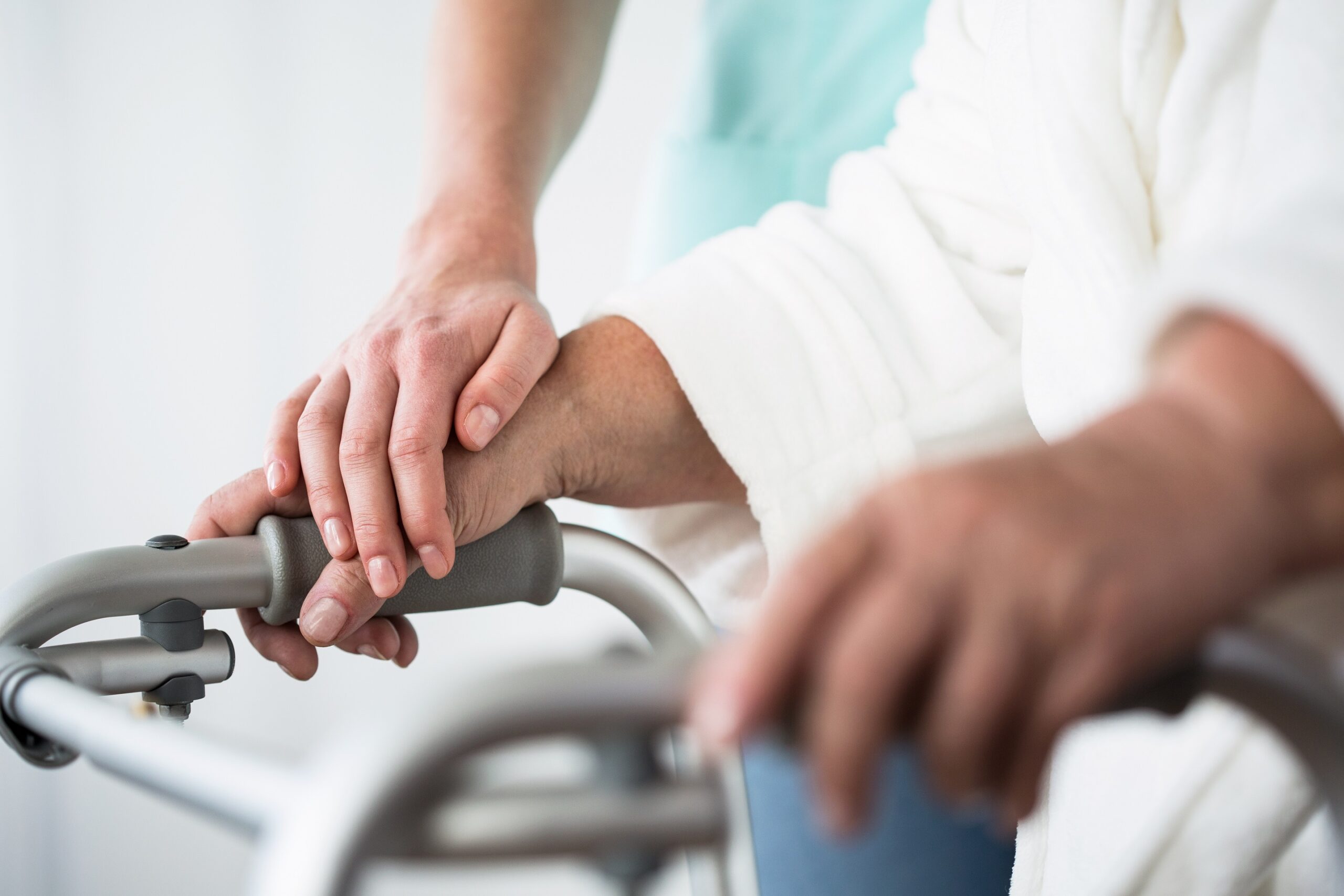
The Australian Institute of Health and Welfare (AIHW) recently released the report, Injury among women 2022-23. This report shows that unintentional falls are the leading cause of injury hospitalisation and death for women.
In the year 2022-23, falls injuries in women were responsible for:
- 122,826 hospitalisations;
- 57% of injury hospitalisations; and
- 3,437 deaths.
While males are more likely to be injured and hospitalised across most causes, falls are one of the few exceptions. The rate of falls in males is reported to be 730 per 100,000, while the rate in females is around 770 per 100,000. The AIHW reports that the death rates for falls is currently the highest of the last decade.
The increasing incidence of falls may be related to population ageing. In Australia, women represent an increasing proportion of older adults. Factors that increase the risk of falls in older adults include musculoskeletal decline, osteoporosis, and cognitive decline. Dementia increases the risk of falls almost three-fold due to effects on balance and gait control. Research also suggests that medications are a significant contributing factor to falls.
Effect of medications on falls risk
The impact that medications play in falls is difficult to quantify. One study looking at elderly patients admitted to hospital with hip fractures found that medications were a likely contributing factor in 41% of cases.
Polypharmacy is an important consideration, with studies finding a significant increase in falls risk for patients taking more than four medications. As the population ages and chronic disease management becomes more complex, the prevalence of polypharmacy has risen in Australia.
Some medications have been identified as being of particularly high risk of causing falls. These are sometimes referred to as fall-risk increasing drugs (FRIDs), and they appear to be more strongly related to falls than polypharmacy alone. Medications classified as FRIDs include many medicines that act on the central nervous system, i.e. sedatives and hypnotics, neuroleptics and antipsychotics, antidepressants, and opioids.
There is a range of ways in which a medication may increase the risk of falls, including:
- Sedation;
- Cognitive impairment;
- Orthostatic hypotension;
- Muscle weakness; and
- Impaired vision or balance.
Some medications may contribute to falls via multiple mechanisms. For example, anticholinergics can cause sedation, cognitive impairment, and visual disturbances. Drug interactions may also increase a person’s falls risk by amplifying adverse effects. This could be due to additive effects (e.g. increased sedation when a benzodiazepine is combined with an opioid) or due to changes in serum levels as a result of altered metabolism.
Anticholinergic medications are well known for their additive effects. There are many tools available that attempt to quantify the overall anticholinergic effect of a medication regime. The anticholinergic cognitive burden (ACB) scale categorises drugs into three levels:
- Level 1 – drugs with low anticholinergic effect that may still contribute to overall burden (e.g. atenolol, digoxin)
- Level 2 – Drugs with moderate anticholinergic effect that may produce noticeable cognitive effects (e.g. carbamazepine, pethidine)
- Level 3 – Drugs with high anticholinergic activity and a greater risk of cognitive impairment (e.g. clozapine, paroxetine)
The ACB scale can be used to score a patient’s overall risk of anticholinergic adverse effects. A score of greater than three is considered significant, with the risk further increasing as the score increases.
One large retrospective study of older adults with mild cognitive impairment or dementia sought to determine whether drugs with different anticholinergic ratings contribute proportionately to the anticholinergic burden. The study found differing levels of risk for patients with the same ACB score. The evidence suggested that patients taking level 2 and level 3 drugs had a higher risk of falls compared to patients with the same ACB score who were only taking level 1 drugs.
Medicines with strong anticholinergic properties are considered potentially inappropriate for older individuals as the risks typically outweigh the benefits. In addition to falls, these medicines are associated with other serious adverse events, including cognitive impairment and delirium.
Some examples of highly anticholinergic medicines and potential alternatives are shown in Table 1.
Table 1. Highly anticholinergic medicines and potential alternatives
| Indication | Highly anticholinergic medicines
(avoid where possible) |
Potential alternatives
(no or lower anticholinergic effects) |
| Allergic rhinitis | Chlorpheniramine
Promethazine |
Cetirizine
Loratadine Intranasal corticosteroids |
| Major depression
|
Amitriptyline
Doxepin |
Sertraline
Venlafaxine |
| Urinary urge incontinence | Solifenacin
Oxybutynin |
Mirabegron |
| Psychoses | Chlorpromazine
Clozapine |
Amisulpride
Risperidone Ziprasidone |
| Pain | Tramadol | Paracetamol |
| Nausea and vomiting | Cyclizine | Domperidone
Metoclopramide |
Medication review
As medications are a significant modifiable risk factor for falls, regular review is recommended for older adults. Reviews can be used to identify medications with a high risk of harm or a lack of benefit for the individual patient.
Deprescribing may be considered for some patients identified as high risk, particularly if the harms of the medication outweigh the potential benefits for the patient at their current stage of life.
Medication review and deprescribing have been shown to reduce hospital readmission rates in older adults. Studies highlight the particular benefit that reducing the use of potentially inappropriate medications has in preventing readmission.
Other falls prevention strategies
It is thought that around 40% of falls could be preventable. However, the causes of falls are typically multifactorial. Therefore, addressing multiple risk factors will be more beneficial than relying on a single intervention.
In addition to medication optimisation, other falls prevention strategies may include:
- Exercise – a large review found that exercise of any type may reduce the risk of falls by 23%. The benefits may be even higher for exercise programs combining balance and functional exercises with resistance exercises;
- Home hazard assessment and modification;
- Vision correction;
- Mobility aids; and
- Encouraging the use of non-pharmacological therapies where appropriate, e.g. the Therapeutic Guidelines considers psychological and behavioural interventions as first-line options for the treatment of insomnia.
Falls can have significant outcomes for older adults, including serious injury and loss of independence. Individualised assessment of patient risk factors along with the implementation of appropriate interventions can reduce the risk of falls in older adults.
References:
- Andersen CU, Lassen PO, Usman HQ, Albertsen N, Nielsen LP, Andersen S. Prevalence of medication-related falls in 200 consecutive elderly patients with hip fractures: a cross-sectional study. BMC Geriatr. 2020; 20(1): 121.
- Australian Institute of Health and Welfare. Injuries affecting men in Australia: a closer look. AIHW; 2024.
- Australian Institute of Health and Welfare. Injury among women 2022-23. AIHW; 2025.
- Australian Institute of Health and Welfare. Injury in Australia. AIHW; 2024.
- Carollo M, Crisafulli S, Vitturi G, Besco M, Hinek D, Sartorio A, et al. Clinical impact of medication review and deprescribing in older inpatients: A systematic review and meta-analysis. Journal of the American Geriatrics Society. 2024; 72(10): 3219-3238.
- Lary CW, Rosen CJ, Kiel DP. Osteoporosis and dementia: establishing a link. Journal of Bone and Mineral Research 2021; 36(11): 2103–2105.
- Sherrington C, Fairhall NJ, Wallbank GK, Tiedemann A, Michaleff ZA, Howard K, et al. Exercise for preventing falls in older people living in the community. Cochrane Database Syst Rev. 2019; 1(1): CD012424.
- Xue L, Boudreau RM, Donohue JM, Zgibor JC, Marcum ZA, Costacou T, et al. Persistent polypharmacy and fall injury risk: the Health, Aging and Body Composition Study. BMC Geriatr. 2021; 21, 710.
- Zaninotto P, Huang YT, Di Gessa G, Abell J, Lassale C, Steptoe A. Polypharmacy is a risk factor for hospital admission due to a fall: evidence from the English Longitudinal Study of Ageing. BMC Public Health 2020; 20, 1804.
Subscribe Knowledge Centre Updates
Enter your details to receive Knowledge Centre updates