
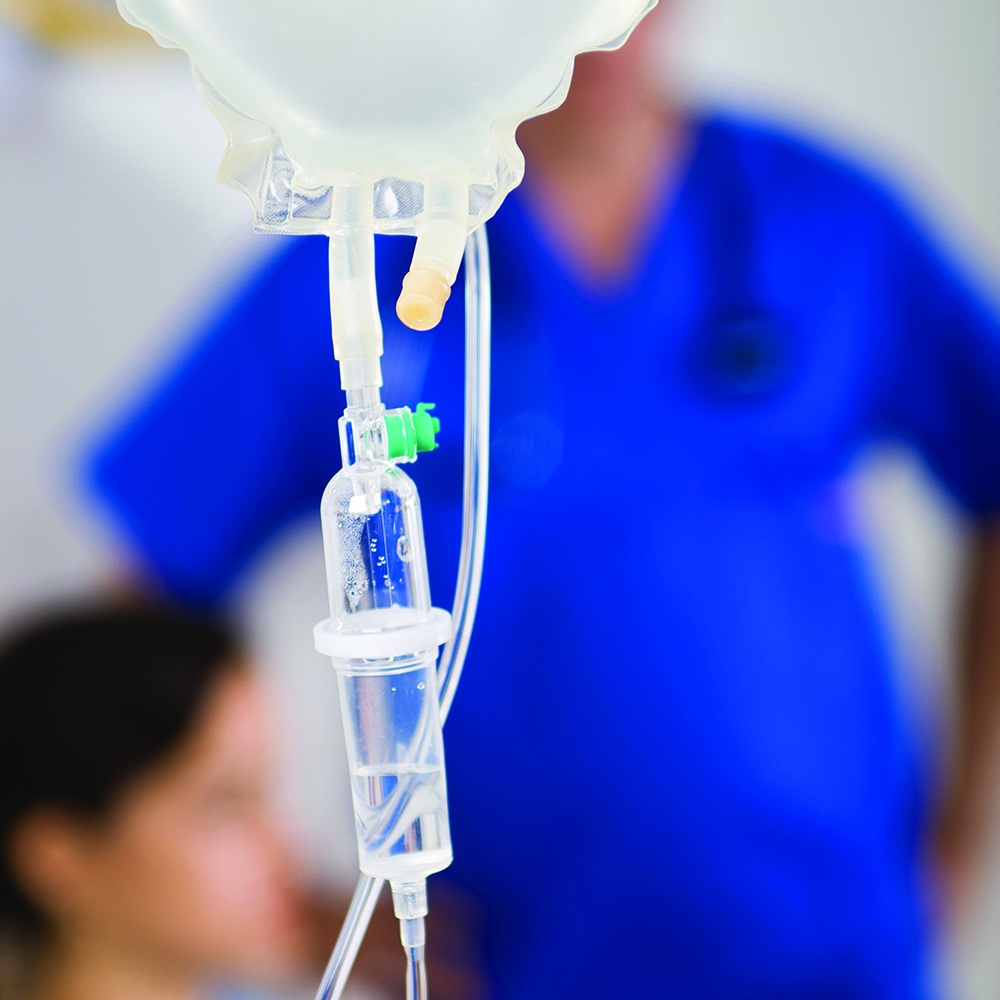
Infusion reactions are unexpected adverse responses that occur during or shortly after the infusion of a medication. These reactions can be allergic or non-allergic and may affect any organ system. Many reactions are mild, but severe and even life-threatening reactions can occur. Therefore, early recognition and prompt intervention is essential.
There is a wide spectrum of signs and symptoms associated with infusion reactions, including:
- Flushing;
- Itching;
- Urticaria;
- Fever or chills;
- Dyspnoea or chest tightness;
- Hypotension or hypertension;
- Back or abdominal pain; and
- Gastrointestinal effects (e.g. nausea, vomiting).
Infusion reactions can have a significant impact on patients and the healthcare system. They may necessitate prolonged infusion times, dose reductions or delays, discontinuation of therapy, or hospitalisation.
The onset and severity of these reactions can also differ widely which impacts their management:
- Mild to moderate infusion reactions
- Often non-allergic and related to cytokine release.
- Typical features include flushing, mild dyspnoea, fever, pruritus
- Severe infusion reactions
- May involve airway compromise
- Typical features include bronchospasm, angioedema, severe hypotension.
- Delayed reactions
- May occur hours to days after administration. These reactions are less common and may present with symptoms such as fever, fatigue, joint pain, and muscle aches.
- Drugs associated with delayed infusion reactions include monoclonal antibodies, parenteral iron, and enzyme replacement therapies.
Clinically, it is often difficult to distinguish allergic from non‑allergic infusion reactions. Anaphylaxis is the most severe presentation of an allergic reaction. This is characterised by rapidly developing and life-threatening problems affecting the airway, breathing and circulation which is often accompanied by skin or mucosal changes. This is a medical emergency requiring prompt intervention.
Anaphylactoid reactions mimic the signs and symptoms of anaphylaxis. However, these reactions are not IgE-mediated and can occur upon first exposure to an agent. The immediate management of these two conditions is the same.
Risk factors
Infusion reactions can occur with a wide range of medicines. Drug classes that are more commonly implicated include:
- Monoclonal antibodies;
- Taxanes;
- Platinum-based chemotherapy;
- Pegylated liposomal doxorubicin; and
- Asparaginase.
Non-allergic infusion reactions are typically more likely to occur with the first or second exposure to a drug. The rate of infusion is a significant factor, and concomitant medications may also have an impact. The formulation may be important to consider as some excipients may contribute to these reactions (e.g. polysorbate 80).
Infusion reactions can occur with subcutaneous administration, although the incidence is much lower than intravenous. When a medication is administered subcutaneously, serum levels rise more slowly than when the same medication is administered intravenously. This results in later and lower peak serum concentrations (Cmax). It is thought that a faster and higher Cmax is associated with a more rapid release of cytokines. Therefore, subcutaneous administration may reduce the risk of cytokine-mediated reactions. However, this is often at the expense of an increase in local injection site reactions.
Monoclonal antibodies
Many monoclonal antibodies are associated with infusion reactions. Studies suggest that the origin of the drug (i.e. human, chimeric, or mouse) does not correlate with the risk of reaction. This supports the understanding that most of these reactions are caused by cytokine release, rather than an IgE-mediated allergy. However, anaphylaxis has also been reported with monoclonal antibodies.
Rituximab is known to have a particularly high incidence of infusion reactions. In clinical trials of lymphoma patients, the incidence was as high as 77% for the first infusion, reducing to 30% for the fourth infusion. Most of these reactions could be classified as mild to moderate, with severe reactions reported in around 10% of patients. The incidence of infusion reactions when rituximab is used for non-cancer indications appears to be significantly lower.
These reactions are typically non-allergic and can be reduced with premedication and adherence to a slower infusion rate for the first dose (refer to the product information and/or clinical guidelines for recommendations). Particular care is required in patients with a high tumour burden or a high number of circulating malignant cells as they may be at greater risk of severe infusion reactions.
Platinum agents
Carboplatin, cisplatin, and oxaliplatin are all associated with infusion reactions. In most cases these reactions are IgE-mediated, and their incidence tends to increase with each treatment cycle. For oxaliplatin, cycles 9-10 are reported to be the average time of infusion reactions to first occur. For carboplatin, they tend to occur around cycle 5-6.
Vancomycin
Rapid administration of vancomycin can cause non-allergic infusion reactions. Symptoms can include hypotension, flushing, erythema, urticaria, pruritus, and pain or muscle spasms of the chest and back. Recovery is typically rapid with discontinuation of the infusion. Other potential causes of the reaction (e.g. anaphylaxis) must be ruled out.
Depending on the severity of the reaction, it may be appropriate to restart the infusion at a lower rate once the symptoms have resolved. In these cases, the patients should be closely monitored in case of further reaction.
Response
Infusion reactions should be managed according to local policies. The following is a general overview of how a reaction may be managed, although strategies may differ for specific drugs.
- Stop the infusion
- Assess the patient
- Check airway, breathing, circulation, vital signs, and symptom severity
- Maintain IV access
- Notify the prescriber
- Drug, dose, and timing
- Symptoms and vital signs
- Any interventions already performed
- Administer emergency medication as ordered. Depending on the severity, this may include
- Antihistamines
- Corticosteroids
- Bronchodilators
- Adrenaline for anaphylaxis
- Supportive care as appropriate
- g. oxygen, fluids, continuous monitoring
- Document
- Comprehensively document details of reaction, including onset, symptoms, interventions, patient response.
- Thorough documentation can help to distinguish between allergic and non-allergic reactions. E.g. anaphylactic reactions typically occur within the first few minutes of the infusion, while reactions related to cytokine release usually begin within 30-120 minutes of beginning the infusion.
- Prepare for rechallenge (if appropriate)
- Some therapies may be restarted at a slower rate once symptoms resolve, depending on prescriber directions and local policy.
- Patients who experience mild to moderate infusion reactions are more likely to tolerate re-challenge (with a slower infusion rate and appropriate premedication) compared to patients who experience severe reactions.
Immediate escalation is required for patients who show any of the following signs or symptoms:
- Airway compromise
- Respiratory distress
- Hypotension
- Altered consciousness
- Rapidly progressing symptoms.
The presence of these symptoms may indicate anaphylaxis or a severe reaction requiring an emergency response.
Prevention strategies
There are many strategies to reduce the risk of infusion-related reactions.
Pre-medication protocols
Many high-risk drugs have pre-medication protocols to reduce the risk of reactions. These protocols may include the administration of an antihistamine, steroid, and/or antipyretic prior to the infusion.
Slow initial infusion rates
Gradual titration reduces the risk of cytokine-mediated reactions. For some medications, a reduced dose may also be recommended for the first infusion.
Close monitoring
Close monitoring is particularly important during the first 15-30 minutes of the infusion and during dose escalations.
Patient education
Encourage patients to report early symptoms such as itching, throat tightness, or dizziness. Patients should also be educated on the potential for delayed reactions following discharge and should understand what symptoms require prompt reporting to their healthcare professional.
Conclusion
Infusion reactions are unpredictable but can be managed with careful observation, rapid assessment and prompt intervention. Adherence to the recommended infusion rate and any premedication requirements may minimise patient risk. Recognising early symptoms and following clear escalation pathways further improves patient safety. Comprehensive documentation may also assist in differentiating non-allergic reactions from true allergies. This may avoid the inappropriate discontinuation of first-line therapies.
The decision to restart an infusion will depend upon the nature of the infusion reaction. In the case of mild and moderate infusion reactions, rechallenge can often be considered. Factors that will influence this decision include the drug in question, the type of reaction, treatment goals, and the preferences of the patient and prescriber. If rechallenge is attempted, premedication and a reduced infusion rate may be implemented.
While most infusion-related reactions are mild to moderate, severe reactions can occur. It is important that healthcare professionals recognise these reactions and act quickly to ensure optimal outcomes.
References:
- Amemiya T, Suzuki H. Risk factors for infusion reactions associated with rituximab therapy. Cancer Diagn Progn. 2025; 5(5): 552-556.
- Chung CH. Managing premedications and the risk for reactions to infusional monoclonal antibody therapy. The Oncologist 2008; 13(6): 725–732.
- Peterson C. An AP perspective on infusion reactions in the era of immunotherapy. J Adv Pract Oncol. 2022; 13(3): 247-252.
- Roselló S, Blasco I, García Fabregat L, Cervantes A, Jordan K, ESMO Guidelines Committee. Management of infusion reactions to systemic anticancer therapy: ESMO Clinical Practice Guidelines. Ann Oncol. 2017; 28(4): iv100-iv118.
- Vogel WH. Infusion reactions: diagnosis, assessment, and management. Clin J Oncol Nurs. 2010; 14(2): E10-21.
Subscribe Knowledge Centre Updates
Enter your details to receive Knowledge Centre updates